
An improvement in political relations, anchored in a restoration of peace and tranquillity at the border, could open up opportunities for expanded economic and commercial relations between them, suggests former foreign secretary Ambassador Shyam Saran.

'Tensions and dialogue are likely to go hand-in-hand with China.' 'The goal should be to cultivate power so that one can negotiate from a position of strength.'

The further expansion and upgrade of the Chinese military does not augur well for India, which continues to confront an increasingly belligerent China on its borders, notes former foreign secretary Shyam Saran.

Congress spokesperson Supriya Shrinate also alleged that foreign policy has been reduced to photo-ops and a chest-thumping exercise and is being used to secure contracts for a businessman.

A red carpet will be rolled out to facilitate Shyam Saran Negi to cast his vote in the Himachal assembly elections without any hassle.

The Devyani Khobragade row, India-Pakistan bickering over Afghanistan and a nightclub act by two diplomats were some of the issues discussed at one of the sessions at Jaipur Lit Fest, reports Sanchari Bhattacharya.

Modi's unexpected announcement of achieving net zero by 2070 may have neatly deflected the pressures on India to sign up to an ambitious pledge but it does nothing to dispel the ecological emergency that threatens all life on the planet, , points out former forerign secretary Shyam Saran, the prime minister's special envoy and chief negotiator on climate change 2007-2010.

Chinese foreign policy will acquire a more ideological and less pragmatic character. It will be conducted with more nationalist overtones, predicts former foreign secretary Shyam Saran.

The fault line between the West and Russia has widened into a deep chasm and this is likely to endure in the foreseeable future. Far from forcing its way into the European tent, Russia may be reduced to the status of an even more sullen and weakened bystander on its periphery. The US appears to have won this hand with little cost to itself, observes former foreign secretary Shyam Saran.

Rather than worry about what picture of India is being painted in the foreign media, the focus must be on marshalling all our energies to provide relief and solace to our deeply wounded and dispirited citizens, says former foreign secretary Shyam Saran.

Xi does not want to risk any political or economic crisis complicating his bid to remain in office, observes Ambassador Shyam Saran, the former foreign secretary.
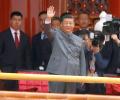
'India finds itself in an unenviable situation today with its prospects diminished by acutely polarised domestic politics and the setbacks suffered during the pandemic,' notes Ambassador Shyam Saran, the former foreign secretary.
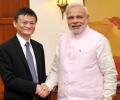
Alibaba's pervasive economic and social influence in China is seen as a threat to the authority of the Chinese Communist party, notes Shyam Saran.

China's behaviour in the post-pandemic geopolitical landscape which may determine the Quad's future trajectory, notes former foreign secretary Shyam Saran.

A committee tasked by Prime Minister Manmohan Singh to assess the situation on the China border is understood to have reported that Indian troops are not being allowed to patrol up to the perceived Line of Actual Control by Chinese army.

India should not be left behind. It should join the seven central banks which are studying feasibility and safeguards necessary to eliminate risks, particularly from hacking, advises former foreign secretary Shyam Saran.
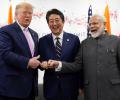
Prime Ministers Modi and Abe enjoyed a close and empathetic relationship and this certainly gave a sustained momentum to the India-Japan strategic partnership. It is necessary for India to reach out and engage with his successor as early as possible, advises former foreign secretary Shyam Saran.

'At critical moments an inability to take tough decisions resulted in potentially far-reaching solutions slipping out of our grasp.' 'If similar opportunities come Narendra Modi's way will he act differently?' asks Karan Thapar.
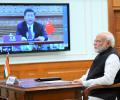
'If Asia does become a Chinese dominated space, it will not only be because India failed to get its economic act together but also because it did not stand up for its democratic credentials,' warns Shyam Saran, the former foreign secretary.
This legislation, passed in 1967 on the recommendations of the National Integration Council to combat communalism, casteism, regionalism and linguistic chauvinism and to deal with associations engaged in secessionist activities, has changed colour over time and has now become a statute that has created new categories of offences and punishments, 108 ex-bureaucrats said in an open letter.

In perhaps the first major conference on the United States-India strategic partnership in the aftermath of the Khobragade controversy that plunged the bilateral relationship in a downward spiral and is now in the process of being resurrected, the undeniable consensus among the panelists and participants was that much ballyhooed strategic convergence between Washington and New Delhi has dissipated.
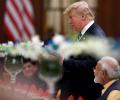
Modi may take satisfaction from his display of considerable political skill in managing a mercurial, temperamental and unpredictable US president and nudging him into uncharacteristic restraint and even carefully orchestrated remarks. This personal chemistry will come in handy if Trump returns as president in the November elections, says former foreign secretary Shyam Saran.

'There appears to be greater convergence of interests between China and the US in the Afghan-Pakistan theatre than between India and the US. This is hardly a recipe for a super-alliance,' says former foreign secretary Ambassador Shyam Saran.
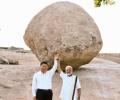
'My understanding is that by the time President Xi Jinping came for the Chennai summit [2019], he had already instructed his army to undertake the action in Galwan in the summer of 2020.'

'Once such conduct becomes legitimate through political and popular sanction, then the ordinary citizen will have no defences left,' warns Shyam Saran.

Several officers in the intelligence agencies want the role of the National Investigation Agency clearly defined to avoid lack of cooperation between the Centre and states.

Modi said whenever Congress came back, all development works came to a standstill.

'India should be able to weather the storm, given its enhanced standing among the major powers. However, India's international clout is partly from its rapidly growing emerging economy and a large and expanding commercial market. 'If the Indian economy continues to slow and protectionist barriers advance, then our international clout will also diminish. The international fallout from bringing the Valley to heel may be more difficult to handle,' says Shyam Saran.

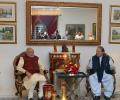
'Will Prime Minister Narendra Modi be able to continue political engagement with Pakistan against the inevitable upsurge of negative and hostile public sentiment?'

In recent years, the twin demands of both religion and defence have been added to the development argument to sweep aside environmental and terrain considerations while undertaking infrastructure development in the Himalayan zone, points out former foreign secretary Shyam Saran.

India has an unprecedented opportunity to develop solar industry because like China, it offers scale which is critical to reducing costs and to stimulate innovation, says Shyam Saran.
'We should not minimise the seriousness of Chinese encroachments because their perception is different.' 'Nor should we fall into the trap of accepting so-called 'buffer zones' in areas of overlapping claims. We cannot have buffer zones in our own territory,' asserts Ambassador Shyam Saran, a former foreign secretary.

'Both have a very nationalistic view of foreign policy.' 'They think they are shrewd and clever diplomats.'

'The digital age has forced diplomats to be less formal and more accessible, reaching out to ordinary people both within and outside their countries, combining statecraft with streetcraft,' says former foreign secretary Ambassador Shyam Saran.

...educated people are better decision-makers must be rejected, the CJI said.

India needs to be alert on how the Doklam standoff plays into the factional infighting in China's Communist Party, says Ambassador Shyam Saran, the former foreign secretary.

We have already suffered considerable collateral damage as a result of the war, and its continuance will continue to dampen our prospects for faster economic growth. We have a direct and legitimate interest in its early cessation, counsels former foreign secretary Shyam Saran.

The contrived controversy over the so-called blockade of the India-Nepal border has obscured the perilous path on which the current ruling elite in Nepal are taking the country towards.

'We should not have waited for the political crisis in Nepal to erupt before being galvanised into action,' says Shyam Saran. 'We should have seen what was coming and not accepted assurances from the leaders of the political parties at their face value.'
